
A new kind of intelligence is reshaping how the world works. This story reveals the technologies driving the shift — and how Schaeffler is weaving them into a unified strategy for resilient, future-ready manufacturing.
Across Asia Pacific, a transformation is underway in how businesses plan and run their operations. Digital assistants are helping service centres respond to customers with greater speed, logistics networks reroute themselves before delays compound, and machine data is helping manufacturers stabilise output despite labour shortages and fluctuating demand. In cities from Singapore to Seoul, everyday interactions now carry a subtle sense of acceleration.
None of these moments draw attention. But beneath the mundane choreography, something fundamental has changed.
What is it that we no longer see?
It’s the long waits, the blind spots, and the erroneous decisions that could have been made without the full picture. These frictions are dissolving as intelligence is infused seamlessly into how work gets done. It is a global shift powered by three forces — Artificial Intelligence (AI), the Internet of Things, and Process Automation — each reshaping how societies operate and how value is created.
Intelligent Action with Artificial Intelligence
AI is accelerating global productivity, and its impact across Asia Pacific is becoming increasingly visible. Generative AI is compressing once-complex tasks — writing, analysis, design — into far shorter cycles, enabling teams to respond with greater speed and precision. Beyond content generation, AI systems are increasingly able to learn from operational patterns, enabling them to adapt, predict future outcomes, and improve continuously without the need for explicit reprogramming.
For manufacturing, this shift reshapes how factories anticipate and act. AI now turns data into foresight by detecting variability earlier, predicting potential disruptions, and refining how machines, teams, and materials interact. Predictive maintenance alone is estimated to reduce unplanned downtime by 30–50% and extend machine life by 20–40%. In a region where factories operate across multiple countries, climates, and maturity levels, these gains translate into greater stability, reliability, and cost efficiency.
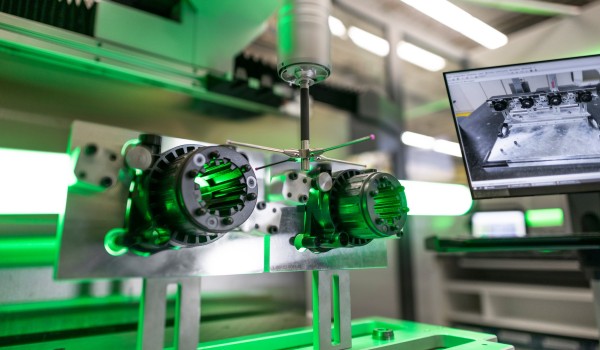
At Schaeffler, AI is viewed as more than just a standalone technology, but as part of a broader strategic ecosystem. The focus is on developing an AI-ready workforce, ensuring teams have the confidence and capability to use AI tools effectively. This comes to life through monthly DigiTalk sessions, where teams across regions exchange insights on digital tools with strong focus on AI and real-world applications, from predictive maintenance and vision AI to intelligent robotics. By strengthening digital fluency across the organisation, Schaeffler ensures AI becomes part of how its teams solves problems, makes decisions, and innovates for the future. That’s how AI becomes not just something your teams use, but something your organisation grows capable of.
Connectivity at Scale with the Internet of Things
The Internet of Things continues to expand worldwide, with forecasts ranging widely from 20 billion to more than 70 billion connected devices by 2025. Regardless of the projection, the trajectory is clear: billions of interconnected sensors and systems are generating real-time insights that are reshaping how industries operate. This shift is highly relevant for Asia Pacific, a region characterised by dense logistics routes, geographically distributed supply chains, and high variability across operating environments.
In manufacturing, the Internet of Things is the nervous system of the modern factory. Machines, robots, and logistics chains continuously communicate, giving operations the transparency needed for synchronised, real-time responses. Research on connected logistics systems shows that IoT-driven coordination improves material flow, shortens reaction times, and helps teams intervene at precisely the right moment.
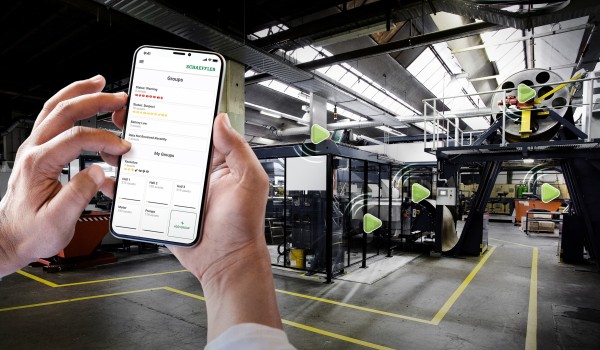
At Schaeffler, IoT plays a central role in building responsive and resilient plants. Solutions such as OPTIME, a wireless condition monitoring system — already deployed across regional sites including the Chonburi plant in Thailand5 — empower teams to detect anomalies early and prevent disruptions. Sites using OPTIME have avoided up to 80% of potential unplanned downtime. This connectivity strengthens plant resilience and provides a model for other organisations navigating their own smart-factory transitions. That’s because the greatest benefits often come not from isolated tools, but from connecting what already exists into a coherent, responsive system. Progress often accelerates when visibility becomes systemic, and when every part of the operation can respond to the same pulse.
Process Automation
Across Asia Pacific, organisations are accelerating the adoption of process automation as governments push for more resilient, technology-enabled industries. National frameworks such as Singapore’s Smart Industry Readiness Index (SIRI) and Japan’s Society 5.0 vision are encouraging industries to adopt smarter, more connected, and more human-centric systems. Together, these initiatives reflect a regional shift toward upgrading how work is executed, not just through new technologies, but through structured pathways for scaling transformation.
Automation is reshaping production environments across the region. Manufacturing Execution Systems (MES) give plants the real-time visibility needed to coordinate materials, equipment, and labour across high-variability environments. This is a critical advantage in APAC, where many facilities operate with heterogeneous legacy equipment. With clearer insights and faster responses, automation is strengthening consistency and elevating the rhythm of modern production.
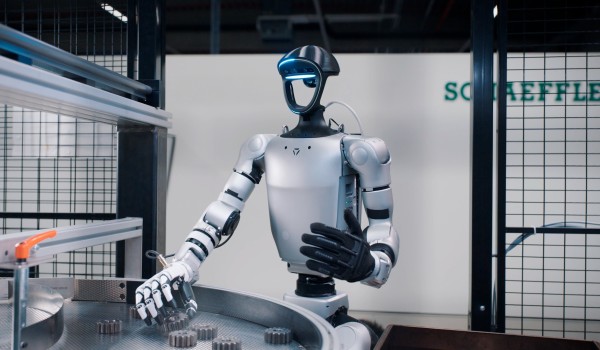
Schaeffler’s approach is anchored in two strategic pillars: Digital Architecture and Digital Portfolio.
- Digital Architecture serves as the backbone of Schaeffler’s digital transformation. It provides a consistent and transparent foundation where all digital solutions are coordinated with one another, ensuring the seamless integration of systems, components, and shared standards. This unified architecture enables automation to scale reliably across sites and initiatives.
- Digital Portfolio is a value-driven system for managing ideas, demands, and digital investments. It’s how Schaeffler teams manage ideas, demands, projects, and digital solutions holistically. It ultimately ensures that decisions about digital investments are well-founded and that the most impactful solutions are implemented effectively and efficiently.
This approach ensures automation initiatives are built on a unified digital backbone and scaled through value-driven decision-making. A key example is Schaeffler’s digital pilot plant in Vietnam, developed in collaboration with FPT Software. The facility integrates smart-factory systems and advanced process-automation technologies to enhance transparency, efficiency, and flexibility across operations. Taken together, these efforts highlight how disciplined foundations can help organisations scale automation with clarity and coherence — a principle that offers useful direction for any business charting its own transformation journey.
Digital Strategy Is The True Differentiator
Technology will continue to evolve, but the real differentiator is how organisations use it. The most successful companies are not defined by the number of tools they deploy, but by the clarity of the strategy behind them.
At Schaeffler, digitalisation is guided by a long-term approach that aligns every capability — from AI and IoT to process automation — with a unified digital architecture, a focused digital portfolio, and a workforce equipped to use these tools effectively.
Digitalisation, in this sense, is not a race for the latest systems. It is a deliberate journey that strengthens resilience, elevates decision-making, and sets the foundation for sustainable growth. The future of manufacturing will be shaped by technology, but the advantage belongs to those who shape it with strategy.