
As manufacturers push to electrify, decarbonize, and digitize, they are colliding with old limits of cost, compliance, and complexity. What breaks through as the torque are technologies designed to differ.
Across Asia Pacific, industries built on motion are accelerating into a new era of transformation—automakers must electrify without pricing out buyers, manufacturers must digitize production without disrupting lines, and logistics operators must steer supply chains through global and regional disruptions. These shifts are defining the conditions in the race to electrify, digitize and scale. Staying ahead hinges on one question: How can technology scale efficiently and sustainably in diverse, fast-changing markets?
The old playbook relied on maximizing the output for more mileage out of existing systems and treating sustainability as an add-on. However, manufacturers in Asia Pacific know that this no longer gets them where they need to go. The road ahead demands a new engine of advantage comprising technology differentiators that enable faster adaptation, greener outcomes, and more resilient supply chains.
Masterminding modularity
In a test hall, an electrolyzer stack hums as purified water splits into oxygen and hydrogen. Beside it, another stack is being slotted into place. With a few more arrays, the output surges from a modest 50 kilowatts to several megawatts —enough to power entire vehicle fleets or stabilize local grids. These modules are real, clicking into place like building blocks and engineered for scale in innovation centers—including Schaeffler’s robotics collaborations in Singapore and Korea, and two-wheeler electrification initiatives in India.
The difference between manufacturers with a competitive edge and those without lies in how they view modularity. More than a design choice, modularity is a technology differentiator that enables systems to reconfigure quickly, scale efficiently, and adapt to new use cases without costly redesigns.
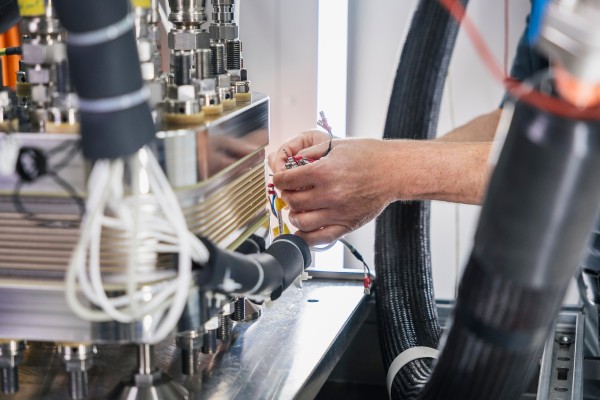
In Asia Pacific—where demand growth is uneven, infrastructure maturity varies widely, and policy environments differ by market—this flexibility is not optional. It is what allows manufacturers to move fast without breaking what already works.
The road to decarbonization is paved with sustainable materials
For all the attention on electrification and efficiency, some of the largest sources of industrial emissions remain embedded in materials themselves. Steel, rubber, and other core inputs are among the largest contributors to industrial emissions, often with significant carbon footprints. This is particularly noticeable in Asia Pacific, where many plants continue to operate traditional blast furnaces powered by coal.
However, a promising transformation is underway: green steel, produced using hydrogen and renewable energy, is gradually making inroads into the industrial sector in Asia.
The transition presents several challenges.
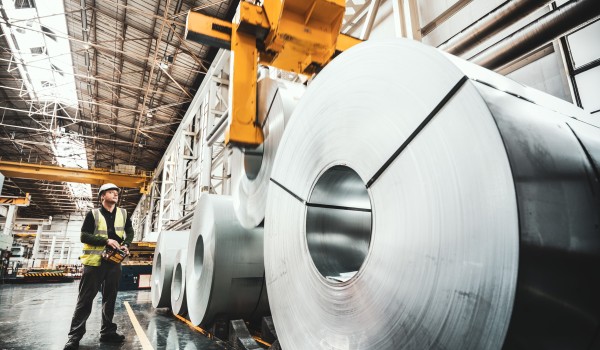
Green steel production via hydrogen-based direct reduced iron (H₂-DRI) and electric arc furnace (EAF) technologies is currently more costly than conventional coal-based methods. And in several countries, limited renewable energy capacity and high CAPEX present formidable barriers to scale. Demand for green steel is still emerging, with buyer sensitivity around price and relatively small “green premiums” impacting adoption speed.
Yet, innovators are forging ahead. Major steelmakers are piloting H₂-ready facilities, while governments and early adopters—especially automakers—are signaling demand for low-carbon steel as a lever of supply-chain decarbonization. Japan, for instance, is tying subsidies to automaker procurement of low-emission steel as part of a broader climate incentive strategy.
Industry leaders such as Schaeffler are closely monitoring the development of hydrogen-forged ‘green steel,’ which has the potential to reduce CO₂e emissions by up to 95% compared to conventional steel. These commitments to differentiated technology like green steel will future-proof industrial supply chains and power their competitive edge.
The power of convergence
For decades, mechanical engineering, electronics, and software evolved along parallel tracks. That separation once made sense. Today, it compounds cost and risk.
The next frontier in motion systems is the convergence of technologies that once evolved in isolation. For decades, mechanics, electronics, and software advanced as separate disciplines and created value. But when they continue to move in separate lanes today, costs and risks compound. Electronics already account for ~40% of a new car’s cost (up from 18% in 2000) and are forecasted to exceed 45% by 2030. Many models still carry more than 100 single-function ECUs. And as vehicles digitize, the attack surface grows: publicly reported automotive cyber incidents surged up to 400 in 2024, a 25% year-on-year increase. For manufacturers in Asia Pacific, this underscores that digital trust and resilience must be designed into every system, not added later.
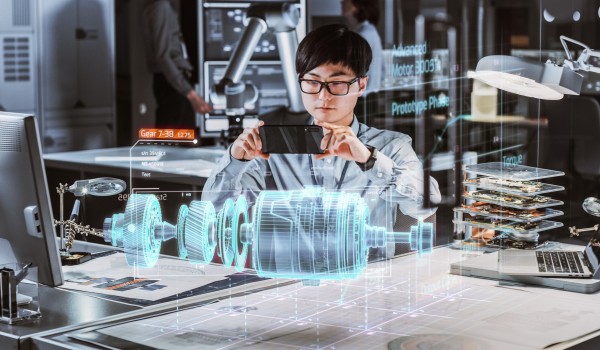
To bend those cost-and-risk curves, manufacturers are collapsing silos. This convergence is reshaping the competitive edge for OEMs in the region, where software integration and cybersecurity are becoming as important as mechanical performance.
The transformation is visible in the rise of the software-defined vehicle across the industry. Schaeffler’s portfolio reflects this shift, with its mechanics, electronics, and software delivered as integrated systems instead of parts. The portfolio includes:
- Complete electric axle systems that integrate the transmission, electric motor, power electronics, and thermal management.
- Battery-management systems and control units for modern E/E (domain/zone control units), as well as engine and transmission control units.
- Chassis mechatronic systems such as steer-by-wire solutions.
- Active damping systems that improve shock absorption and coordinate vehicle dynamics.
The same principle applies beyond mobility. Digital twins for robotics are now reshaping industrial automation. In Asia Pacific, where labor shortages and rising wages accelerate adoption, digital twins allow systems to be simulated and stress-tested virtually, cutting costs and compressing launch timelines. In energy, marrying mechanical assets with electronic controls and predictive software measurably is also lifting uptime and efficiency. This is evident in the reviews showing supervisory control systems—which are automated, layered control schemes—as levers that boost electrolyzer efficiency and scalability in hydrogen plants. After all, electrolyzers work best when the stack power supply subsystem, control subsystem, and the necessary power electronics are co-designed as one system.
This is where convergence becomes a true technology differentiator: collapsing silos, amplifying efficiency, and creating the competitive edge that manufacturers in Asia Pacific will need to lead in a digitized future.
Let the difference take shape
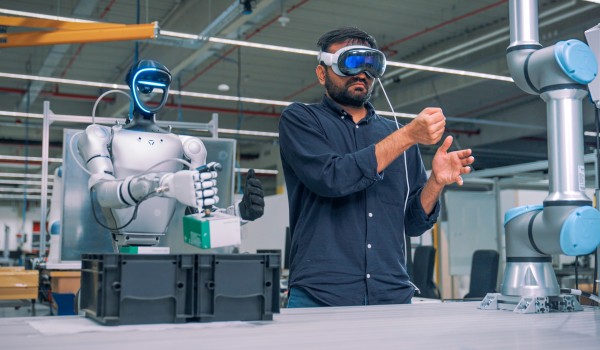
For industries built on motion, the differentiators of the future will not be single breakthroughs but the ability to combine and scale technologies across domains. The opportunity now is to co-create that future—harnessing modularity, sustainability, and convergence to turn complexity into control and shape the next era of competitive advantage. The winners will be those who design systems that can evolve economically, sustainably, and securely under real-world constraints.